Home Coffee Bar Ideas: 25 Ideas for Every Space, Style and Budget
SHORT ANSWER
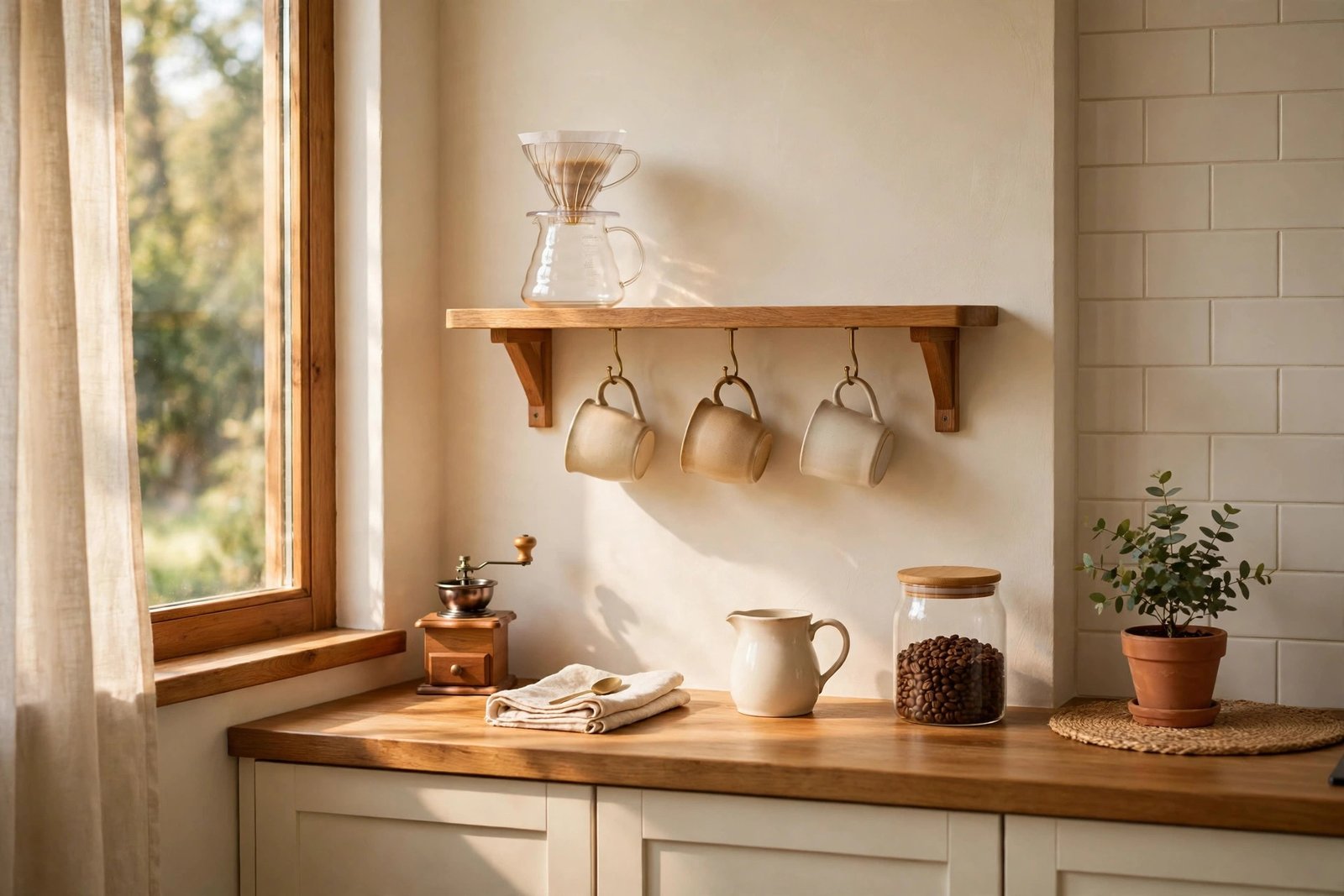
A home coffee bar needs three things: a surface, a brewer, and storage for cups and coffee. That is the whole setup. The smallest workable corner is about 18 inches of counter space, which fits a small brewer and a few mugs. If you have less than that, a wall shelf or a rolling cart can work instead. The rest of this guide shows you 25 ways to build it, grouped by space, style, and budget.
| Space needed | About 18 inches of counter — the smallest workable corner |
| Budget range | About $40 to $1,500+ |
| Best for | Small corners, bare walls, rentals, and big kitchens |
| Styles covered | Modern Minimal, Farmhouse, Vintage European Cafe, Brass and Neo Deco, Green, Boho, Industrial Pipe Shelves, Scandinavian Light Wood, Dark and Moody Luxury |
| Ideas | 25 |
This guide has 25 home coffee bar ideas for every kind of home. You will find ideas for small corners, bare walls, rentals, and big kitchens, plus the measurements and costs you need to build each one.
A home coffee bar needs three things: a surface, a brewer, and storage for cups and coffee. That is the whole setup. The smallest workable corner is about 18 inches of counter space, which fits a small brewer and a few mugs. If you have less than that, a wall shelf or a rolling cart can work instead. The rest of this guide shows you 25 ways to build it, grouped by space, style, and budget.
Home Coffee Bar Dimensions Cheat Sheet
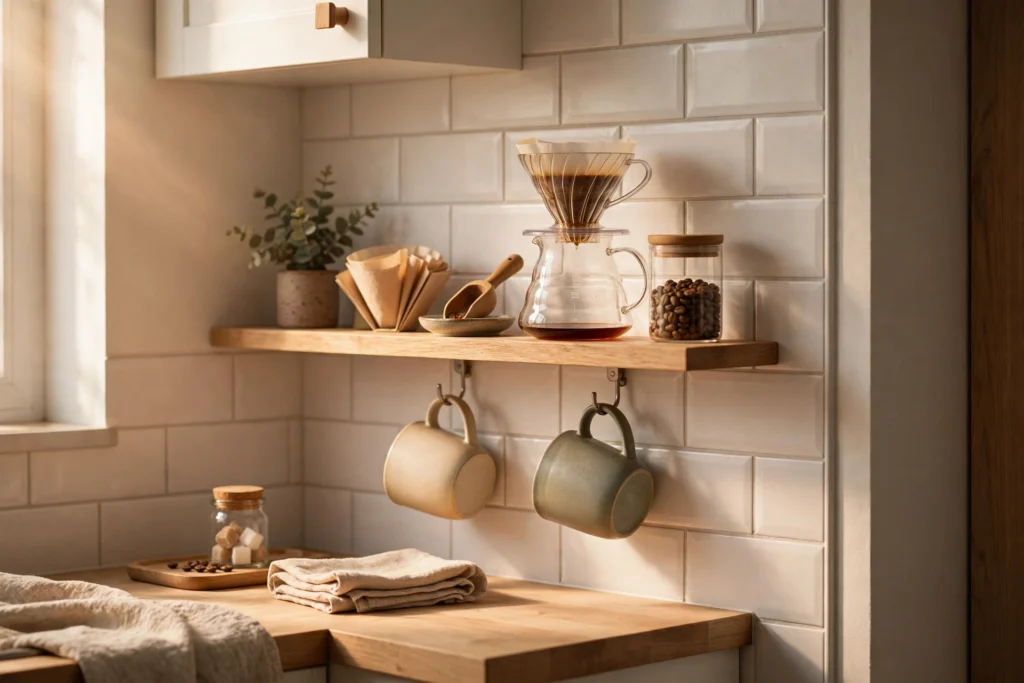
Use these numbers before you buy anything. They are the standard measurements that work for most homes.
- Minimum workable corner: about 18 inches of counter.
- Standard counter depth: 24 inches.
- Wall shelf depth: 8 to 10 inches.
- Wall shelf height: 12 to 16 inches between shelves.
- Espresso machine depth: 12 to 14 inches of counter depth.
- Keurig K-Mini width: 4.5 inches.
- Counter height: 36 inches.
- Mug hook spacing: about 3 inches apart.
- Small grinder footprint: about 5 by 8 inches.
- Two-mug serving tray: about 12 by 18 inches.
- Pour-over cone height: about 5 inches.
- Leave 12 inches of clear space above the brewer for pouring and refilling.
Measure your spot before you order anything. A tape measure and two minutes will save you a return. Check the width first, then the depth, then the height above the counter. If the brewer needs 12 to 14 inches of depth and your shelf is only 10 inches deep, it will not fit, no matter how good it looks in the photo.
Ideas by Space
1. The 18-Inch Corner Bar
Start with the smallest setup that works. An 18-inch stretch of counter holds a small drip maker or a pour over cone, plus two or three mugs. Put a tray under everything so the coffee stays in one spot and spills wipe up fast.
A tray about 14 by 18 inches fits the space and keeps the counter clear around it. This setup costs very little. A simple tray runs 15 to 25 dollars, and you may already own the brewer. If your kitchen has a spare corner near an outlet, this is the fastest way to start. For more small-space layouts, see our guide to coffee bar ideas for small spaces.
2. The Rolling Cart Coffee Bar
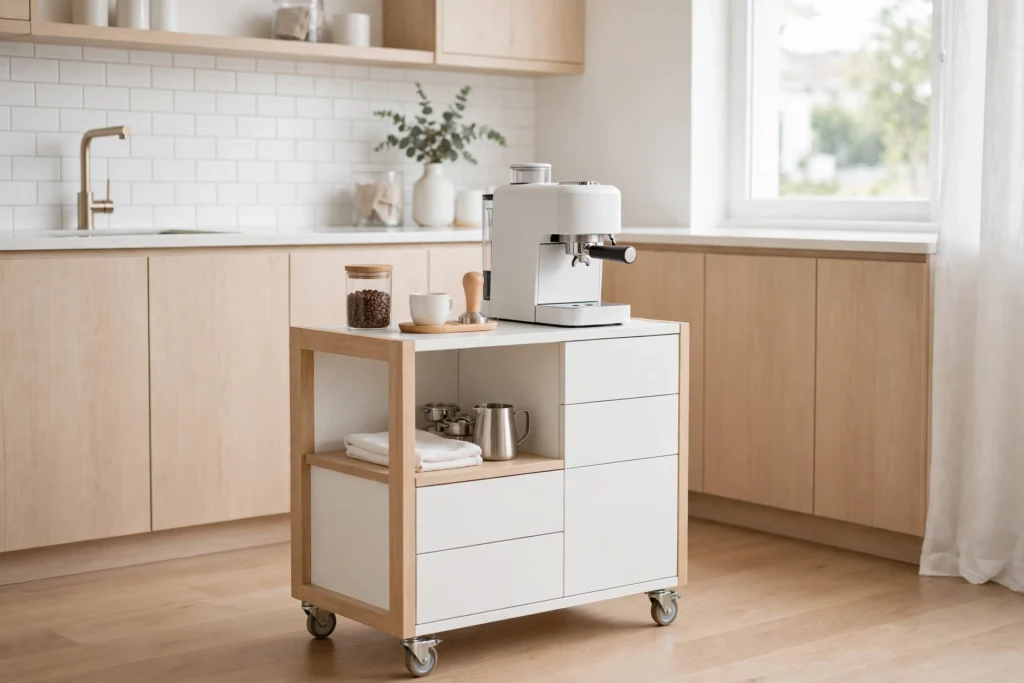
A rolling cart gives you a coffee bar that moves. A cart about 24 inches wide and 16 inches deep holds a brewer on top, mugs on the middle shelf, and beans and filters below. The IKEA RASKOG cart is about 14 by 18 inches and costs around 30 dollars, and it fits in a gap most kitchens already have.
Roll it out in the morning and push it back when you are done. Put a small power strip on the cart so the brewer plugs in wherever the cart stops. This works well in apartments where counter space is short. For a full step-by-step build, see how to set up a home coffee station.
3. The Fold-Down Wall Shelf
When you have no counter at all, use the wall. A fold-down shelf about 24 inches wide and 12 inches deep mounts at counter height, 36 inches from the floor. Fold it down to brew, fold it up when you are done.
It holds a pour over cone or a small single-serve brewer. Mount it into studs so it holds the weight. A basic fold-down bracket set costs 20 to 40 dollars, plus a wood shelf for about 15 dollars.
4. The Pegboard Coffee Wall
A pegboard turns a bare wall into storage and a work surface. A 24 by 36 inch pegboard holds hooks for mugs, small baskets for pods and filters, and a shelf 8 to 10 inches deep for the brewer. Hang it at eye level so the shelf sits at about 36 inches from the floor.
A pegboard panel costs about 15 dollars, hooks and baskets add another 20 to 30 dollars. It looks tidy and everything stays in reach.
5. The Top-of-the-Fridge Station
The top of the fridge is free counter space most people forget. A standard fridge top is about 28 to 36 inches wide and 24 to 30 inches deep, which is plenty for a small brewer and a mug tree. Put a tray down first to catch drips and protect the surface.
Keep a step stool nearby if the fridge is tall. This costs almost nothing if you already own a tray. It works best with a lightweight single-serve brewer, not a heavy espresso machine.
6. The Tray on a Stool
No counter and no wall space? Use a stool. A sturdy stool about 18 inches high with a tray on top becomes a coffee station for one. The tray should be about 14 by 18 inches so it sits steady.
Keep the brewer small, a pour over cone or an AeroPress, which costs around 40 dollars. Store mugs and beans in a basket under the stool. It is the cheapest setup in this guide, and it works in a bedroom or a home office too.
7. The Closet Coffee Nook
A hall closet can become a coffee bar. Most closets are about 24 inches wide and 24 inches deep. Take the door off, add a shelf at 36 inches for the brewer, and a second shelf 12 to 16 inches above it for mugs. Run a short power strip from the nearest outlet.
The whole build costs 40 to 80 dollars in shelves and brackets. For more tiny-kitchen layouts, see our small coffee bar ideas for tiny kitchens.
8. The Peel-and-Stick Rental Bar
Renters can build a coffee bar without drilling a single hole. Adhesive hooks and shelves hold mugs, pods, and small baskets. Large adhesive hooks hold up to 7.5 pounds each, which is enough for two or three mugs.
Put a small shelf on the counter instead of the wall, and use a tray to define the space. When you move out, everything peels off and leaves no marks. Budget about 30 dollars for hooks, strips, and a tray.
9. The No-Drill Tension-Rod Shelf
Tension rods need no screws and no glue. A tension-rod shelf wedges between two walls or inside a cabinet opening and holds mugs and small jars. Pair it with a countertop tray for the brewer.
A tension shelf costs 15 to 25 dollars. It is the safest option for rentals with strict landlords, and it takes five minutes to install.
Ideas by Style
10. Modern Minimal Coffee Bar
Modern means fewer things and clean lines. White walls, a black tray, and one brewer on the counter. Keep only what you use every day. A matte black drip maker or a white single-serve brewer fits the look.
The whole setup costs 100 to 200 dollars, most of it the brewer. Store beans in a plain glass jar and keep the counter clear. If it looks empty, it is working.
11. Farmhouse Coffee Bar
Farmhouse style is warm wood and simple labels. A wood tray, mason jars for beans and sugar, and a chalkboard sign. Use a wood shelf 24 inches wide and 10 inches deep for mugs.
A farmhouse setup costs 80 to 150 dollars, and most of it can come from a thrift store. Keep the palette to wood, white, and black so it stays calm.
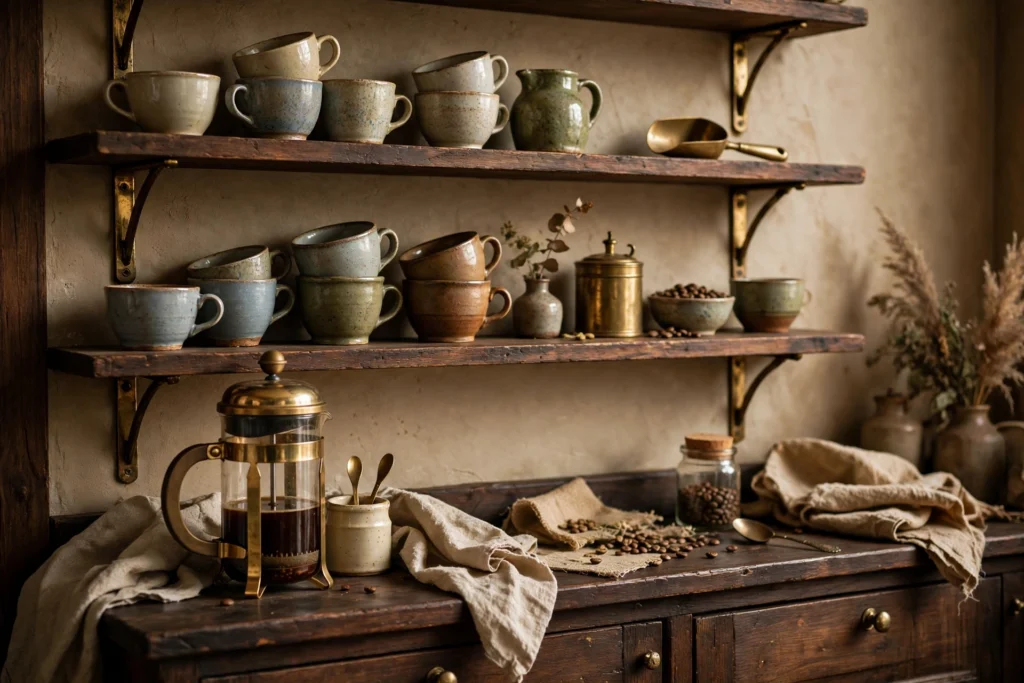
12. Vintage European Cafe Corner
Vintage means old tools that still work. A Bialetti Moka Express, about 35 dollars, makes strong coffee on the stove. A Bodum Chambord French Press, 34 ounces, costs about 35 dollars. A Chemex Classic 6-cup, about 45 dollars, looks good on the counter and brews for two.
Add a small enamel tray and a thrifted scale. For the full look, see our 7 vintage coffee corner ideas.
13. Brass and Neo Deco Coffee Bar
Brass makes a small corner feel finished. A brass rail along the wall holds hanging mugs. A brass tray, about 12 by 18 inches, sits under the brewer. Geometric shapes, like a round mirror or a hexagonal shelf, give it the Neo Deco feel.
A brass rail costs 20 to 40 dollars. Pair it with dark wood and cream walls. See our brass coffee bar ideas for the full style guide.
14. Green Coffee Corner
Plants make a coffee corner feel alive. A small shelf with two or three pothos plants, a jar of coffee beans, and the brewer. Keep plants away from steam so the leaves stay healthy.
A hanging planter above the bar adds green without taking counter space. The whole setup costs 40 to 60 dollars, most of it plants and pots.
15. Boho Coffee Bar
Boho is texture and warm color. A woven basket for pods, a rattan tray, and a macrame hanger for a plant. Use warm wood and terracotta tones. A rattan tray costs 20 to 30 dollars.
Keep the brewer simple, a pour over or a French press, so the textures stay the focus.
16. Industrial Pipe Shelves
Black pipe and wood shelves suit a modern kitchen. Two pipe brackets and a wood shelf 24 inches wide and 10 inches deep hold mugs and jars. A second shelf 12 to 16 inches above holds the brewer supplies.
Pipe brackets cost about 25 dollars a pair. It is sturdy, and it fits a kitchen with stainless steel.
17. Scandinavian Light Wood
Scandinavian style is light wood, white, and open space. A light oak tray, white mugs, and a simple brewer. Keep one plant and nothing else on the counter.
A light wood tray costs 25 to 40 dollars. The setup costs 120 to 250 dollars in total, most of it the brewer and a good grinder.
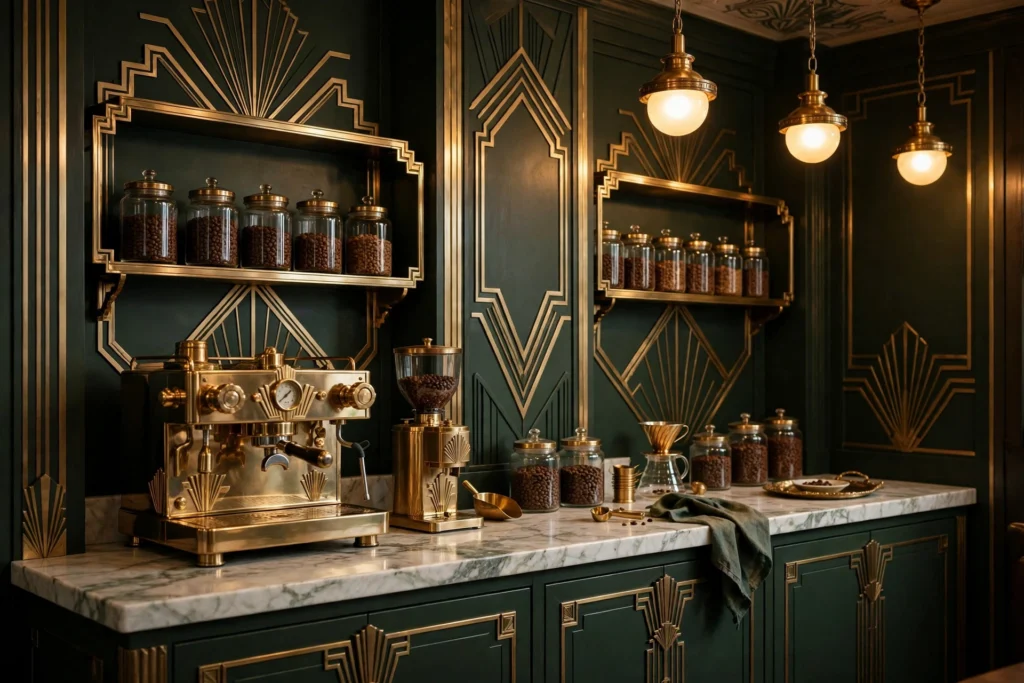
18. Dark and Moody Luxury Bar
A dark wall makes a coffee bar feel like a cafe. Paint one small section dark green or charcoal, add brass fixtures, and use glass jars. A dark setup suits a larger kitchen and a bigger budget, about 400 dollars and up.
Keep the lighting warm, around 2700K, so the corner feels cozy instead of dark.
Ideas by Budget
19. Under $100: The Pour-Over Starter Kit
A pour over kit is the cheapest way to make great coffee. An AeroPress costs around 40 dollars. Add a kettle, a bag of beans, and a tray, and the total is about 75 dollars.
It needs almost no space, about 12 inches of counter. It brews one cup at a time, which suits a single coffee drinker.
20. Under $100: The Thrifted Bar
Thrift stores have everything a coffee bar needs. A tray for 5 dollars, two mugs for 2 dollars each, and a French press for about 10 dollars used. Wash everything well, add a bag of fresh beans, and the total stays under 40 dollars.
It is the best budget option in this guide, and it keeps old things out of the trash.
21. Mid Range: The Drip and Grinder Upgrade
A good grinder changes drip coffee more than a new brewer does. The Baratza Encore costs around 170 dollars. Pair it with a simple drip maker for 60 to 100 dollars. The total is about 230 to 270 dollars.
Grind beans fresh each morning and store them in an airtight jar. This setup suits a household that drinks two or three cups a day.
22. Mid Range: The Espresso Corner
Espresso needs depth. A compact machine like the Breville Bambino is about 8 inches wide and needs 12 to 14 inches of counter depth. Give it a dedicated corner with a small grinder beside it.
The machine costs about 300 dollars, and a basic grinder adds 100 to 170 dollars. For a full layout, see our espresso corner ideas for small apartments.
23. Mid Range: The Pour-Over Bar for Two
A pour-over bar for two needs a Chemex 6-cup, about 45 dollars, and a gooseneck kettle, about 30 to 50 dollars. Add two mugs and a tray. The total is 150 to 200 dollars.
It brews enough for two people and looks good on the counter. Serve it with a simple menu. See our home cafe menu ideas for five drinks to try.
24. Splurge: The Full Espresso Station
A full espresso station has a machine, a grinder, a tamper mat, and a knock box. Budget 800 to 1,500 dollars for the whole setup. Give it 24 inches of counter and a shelf 12 to 16 inches above for cups.
It takes practice to pull a good shot, but the setup lasts for years.
25. Splurge: The Built-In Cabinet Bar
A built-in bar is furniture, not a tray. A cabinet with a counter, shelves, and a small sink costs 2,000 to 15,000 dollars depending on materials. It adds value to the kitchen and holds everything in one place.
If you host often, it doubles as a drinks station. See our bar coffee station ideas for parties to plan it for guests.
Which Setup Fits Your Space?
Match your space and your brewer to a build.
- Small corner plus drip maker: the 18-inch corner bar (Idea 1). Needs about 18 inches of counter and an outlet.
- Bare wall plus pour over: the fold-down shelf (Idea 3) or the pegboard wall (Idea 4). Needs a stud to mount into.
- No counter plus single serve: the rolling cart (Idea 2) or the top-of-the-fridge station (Idea 5). Needs floor space for the cart or a low fridge.
- Rental plus French press: the peel-and-stick bar (Idea 8) or the tension-rod shelf (Idea 9). Needs no drilling and no holes.
Frequently Asked Questions
How much space do I need for a home coffee bar?
About 18 inches of counter is the minimum that works. That fits a small brewer and two or three mugs. If you have less space, use a wall shelf or a rolling cart instead.
What goes in a coffee station?
Five things: a brewer, mugs, coffee beans or pods, sugar and milk, and a tray to hold it all. Add a grinder if you use whole beans.
Can I build a coffee bar in a rental?
Yes. Use adhesive hooks and shelves, a tension-rod shelf, or a rolling cart. Nothing needs drilling, and everything comes off when you move out.
How much does a home coffee bar cost?
A basic setup costs under 100 dollars. A mid-range setup with a grinder and a better brewer costs 200 to 400 dollars. A full espresso station or a built-in bar costs 800 dollars and up.
Can I make a coffee and tea station in one spot?
Yes. Keep the brewer on one side and a kettle on the other. Add a small basket for tea bags next to the coffee beans. The same 18 inches of counter fits both.
Pick one idea from this guide and build it this weekend. Start small, use what you already own, and add pieces as you go.
A coffee bar does not need to be big. It needs to work for your space, your budget, and your morning. Once the first version is running, you will know exactly what to add next, whether that is a better grinder, a second shelf, or a few more mugs.